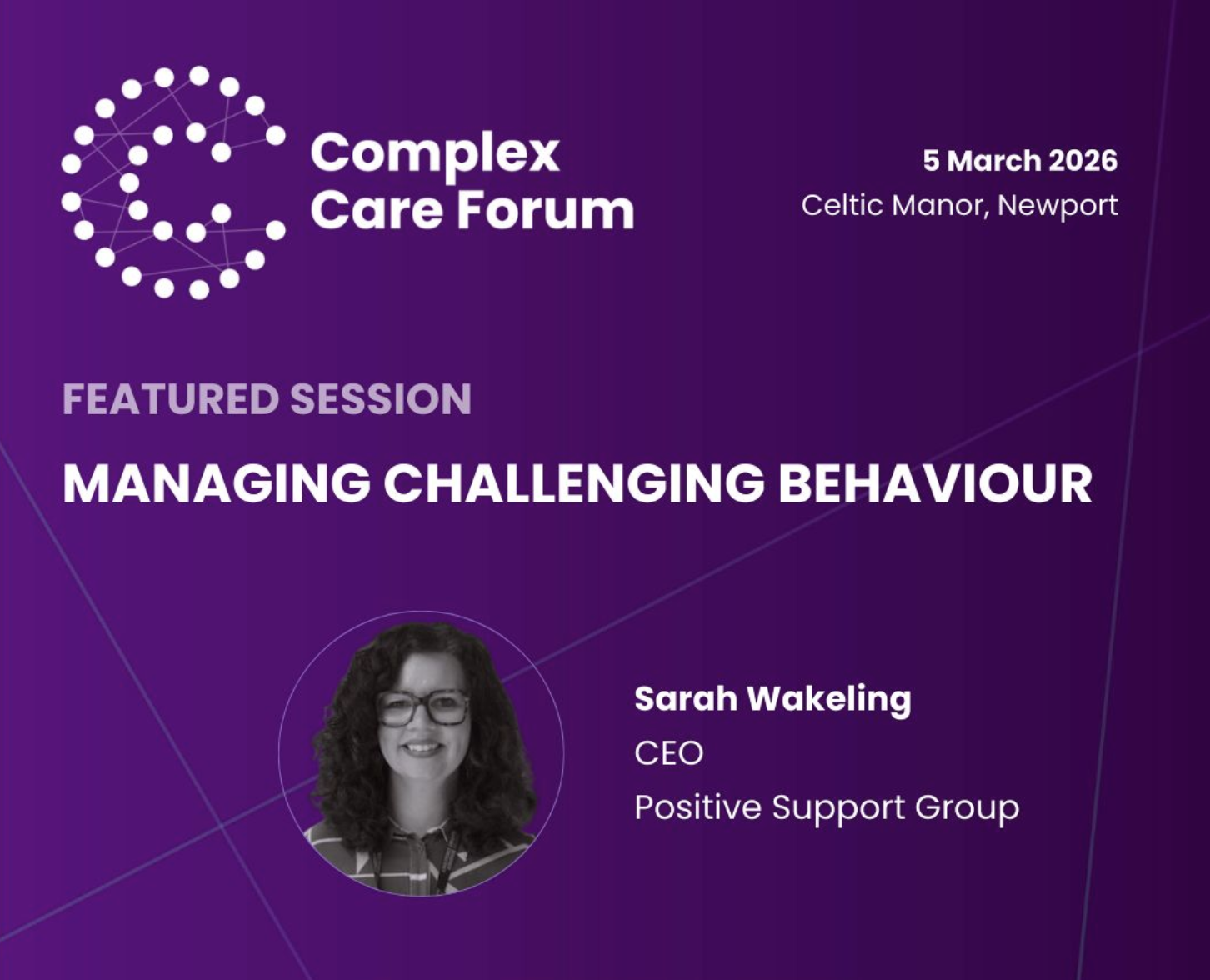
Across the UK, care providers are increasingly supporting individuals with more complex needs than ever before, including dual diagnoses such as autism and mental health needs, trauma backgrounds, communication differences, and medical complexities such as epilepsy or sleep disorders. As acuity in community services continues to rise, this presents both a challenge and an opportunity for providers to strengthen capability, reduce risk, and improve quality of life for the people they support.
This formed the focus of my presentation at the Complex Care Forum in Wales, where I considered how Positive Behaviour Support (PBS) can provide a structured, person-centred and evidence-based framework to meet these challenges.
Set against these growing challenges, the discussion focused on how PBS is best understood not as a single intervention or a set of de-escalation techniques, but as a broader person-centred framework for support. This approach is designed to improve quality of life through understanding and meeting individual needs, reducing behaviours of concern safely without punishment, coercion, or unnecessary restriction, and embedding human rights and least restrictive principles throughout care.
The session also considered how PBS can be embedded within provider settings through a values-based culture, formulation-driven practice, strong governance, workforce capability, and a clear focus on outcomes that matter, including engagement, independence, skill-building, emotional regulation, and meaningful choice.
One of the most encouraging aspects of the day was hearing colleagues reflect on practice within their own services, identifying areas where there may have been some drift, and considering how PBS can offer a helpful framework for evaluation and improvement when they return to their teams. These conversations were a valuable reminder of how sharing practical, evidence-based approaches can encourage reflection and positive change.
I look forward to continuing these discussions and supporting providers as they embed PBS within their organisations.